


McLaren team boss Andrea Stella explains what makes Norris and Piastri’s MCL39 so strong in the 2025 Formula 1 season: It’s not just the tire management
Since the McLaren MCL39 handles the Pirelli tires so well, Lando Norris and Oscar Piastri are among the favorites for the drivers’ title in the 2025 Formula 1 season. But that’s only half the story, as McLaren team boss Andrea Stella explains: The MCL39 has other equally decisive strengths.
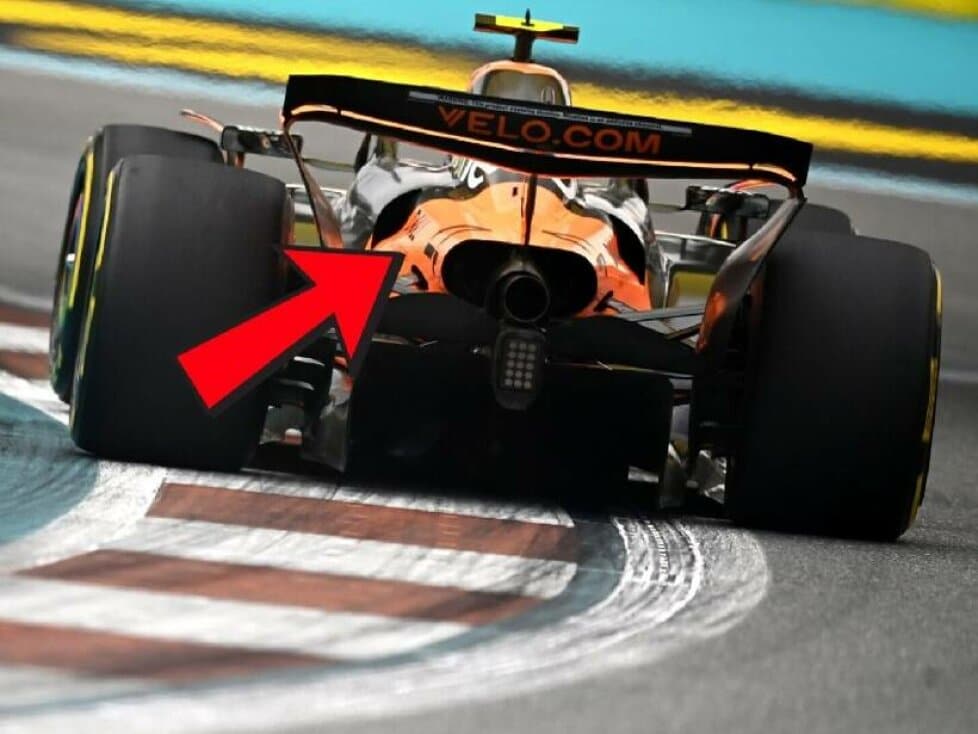
“These are particularly noticeable in high temperatures. Even when it’s hot, our car has a relatively closed design from a bodywork perspective. So there’s a lot of great engineering work that has gone into the cooling system and the vehicle layout,” says Stella. “This shows how much technical excellence at McLaren can now make a real difference.”
Combined with exceptionally efficient tire management, the result is a truly top-class car. Norris and Piastri seem to find it effortless to “keep the tires in an optimal temperature window” with the MCL39, according to Stella. “There’s also some excellent engineering behind that.”
Above all, these qualities have been a long time in the making: “We took a holistic view of all the characteristics of a car that influence tire behavior. Our people identified these factors and implemented them in a way that makes them applicable in practice. In doing so, they have mastered a subject that is still considered something of a ‘black art’ in Formula 1: tire management.”
McLaren’s qualifying speed is “more complex”
However, McLaren is not (yet) setting the pace in every discipline with the MCL39: in qualifying in particular, the drivers sometimes find it difficult to generate enough tire temperature for a fast lap. However, Stella does not consider this characteristic of the race car to be dramatic.
“It’s not like we start a qualifying lap and think, ‘Oh, the tires are cold, this is going to be difficult.’ The tires work well,” says Stella. “So it’s not the classic situation where cars struggle in qualifying and then are strong in the race. From a technical point of view, it’s probably more complex.” Stella does not comment further on this topic.
How much of the MCL39 will be in future McLaren cars
However, he does talk about the future of Formula 1 when he emphasizes that “certain fundamentals” of the current car can be used for future vehicles under the regulations that will come into force in 2026. “Other things we need to figure out first – for example, how to transfer them to the next car,” says Stella.
“One example is aerodynamics, which also influences tire behavior: the aerodynamic downforce level and the so-called ‘map’ will look completely different next year. So we need to figure out how to transfer our accumulated knowledge from the current regulations to a new set of rules with different aerodynamic requirements and concepts.”
“We still have work to do,” says McLaren team boss Stella. “I therefore assume that with the new regulations, we will once again go through a process of continuous improvement – just as we have done with the current regulations.”