


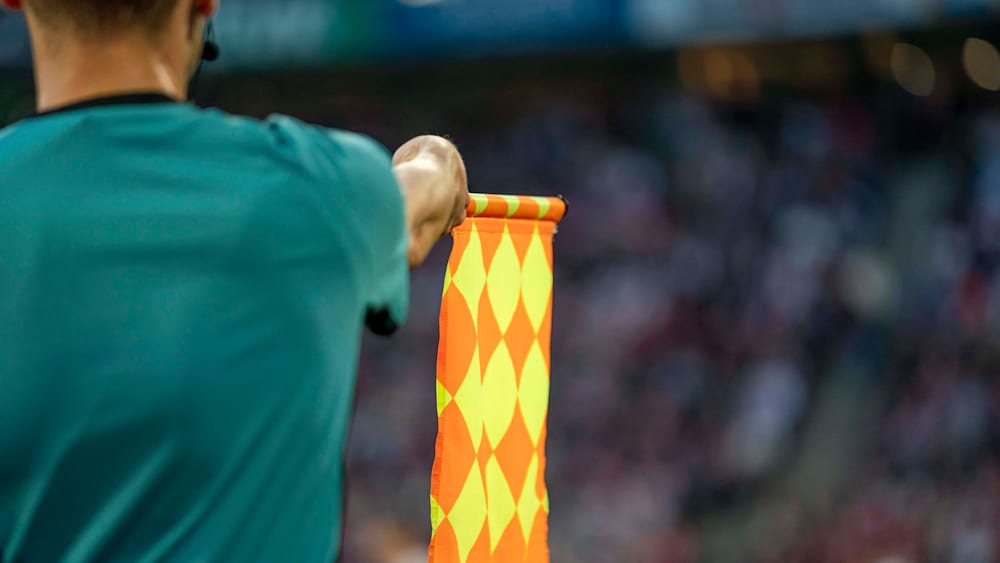
At its annual general meeting in Hensol, Wales, at the end of February, the International Football Association (IFAB) decided on six rule changes, the “daylight” offside was not one of them – but is not yet off the table either. A new challenge system is also being tested.
The IFAB has decided to adapt the soccer rules and, at its last meeting, introduced six changes that will come into force from the 2026 World Cup. More VAR, less time play – but the IFAB did not have a new offside rule on offer. The IFAB had merely agreed to “continue the ongoing experiments in relation to offside” for the time being.
The “daylight offside” model, which was praised by FIFA Director Arsène Wenger and requires the offensive player to be in the offside area with his entire body, is now being pursued intensively. FIFA is pressing ahead with plans for an offside revolution in professional soccer, with a series of tests now set to begin in Canada.
“This is an important pilot project,” explained Wenger, who has had the new model in mind for years: “By testing this new interpretation in a professional competition, we can better understand its effects, including in terms of greater clarity and a more fluid flow of play, as well as promoting attacking play.”
The series of tests for the “daylight offside” will now begin on April 4 at the start of the Canadian Premier League (CPL) season, with FIFA hoping to score more goals with a further development of the offside rule.
The new approach states that a player is not offside if there is still a part of his body that can be used to score a goal in line with the penultimate defender. The player is only offside if there is a gap (“daylight”) between him and the defender, i.e. the player must be completely behind the penultimate opponent. In the Bundesliga, for example, the much-discussed millimeter decisions by the semi-automatic offside technology have recently been the focus of attention.
Challenge system as an extension to the VAR
In addition to the “daylight offside” test, there will also be a new challenge system in the CPL as an extension to the VAR. In this test run, coaches will receive a limited number of review requests for goals, penalties, red cards and mistaken identity; not all match-deciding scenes will be reviewed automatically. The coaches hand a card to the fourth official on the touchline when an intervention is requested and the scene is then reviewed on the monitor.