


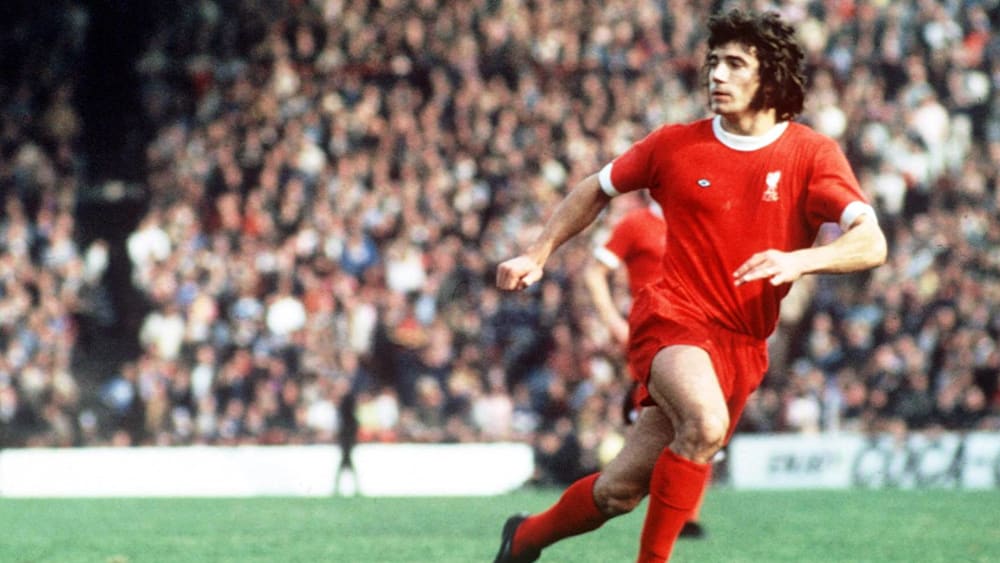
When you hear the name Kevin Keegan, you automatically think of “Mighty Mouse.” But how did the Englishman come to have this iconic nickname in the first place?
Three and a half decades—36 years, to be exact—As a young editor, he investigated the murky depths of the 1971 Bundesliga scandal and, thanks to his almost proverbial persistence and tenacity, quickly became one of the best-informed journalists in Germany on the matter.
His workplace increasingly became the DFB headquarters on Frankfurt’s Otto-Fleck-Schneise, and later various courtrooms. “Real” soccer was a welcome change of pace, but the overtime required by the scandal didn’t stop the young reporter from following FC Bayern through the early 1970s.
One of those matches took the team—now the all-time record champion—to Liverpool FC in 1971. It was the round of 16 in the European Cup Winners’ Cup, and for Bayern, it was a chance for revenge. The previous season, they had suffered a 0–3 defeat at Anfield Road in the Messepokal (the predecessor to the UEFA Cup and today’s Europa League).
A small, agile forward
A small, agile forward whom the fans called “Mighty Mouse.” Wiskow edited the story and chose the headline: “Everyone is afraid of Mighty Mouse.”
ARD reporter Eberhard Stanjek read this during preparations for the live broadcast; he referred to Keegan by that name several times during his report—thereby making the nickname well-known and socially acceptable in Germany. Even six years before his move to Hamburger SV, all of Germany now knew Kevin Keegan as “Mighty Mouse.”
Yet Keegan didn’t really shine in the two games against Bayern: the first leg ended 0–0, and in the second leg, Munich won 3–1. And Heinz Wiskow raved about a young, 19-year-old blond-haired player as “Bayern’s most outstanding player,” undoubtedly a young player with a great future ahead of him. His name: Uli Hoeneß.