


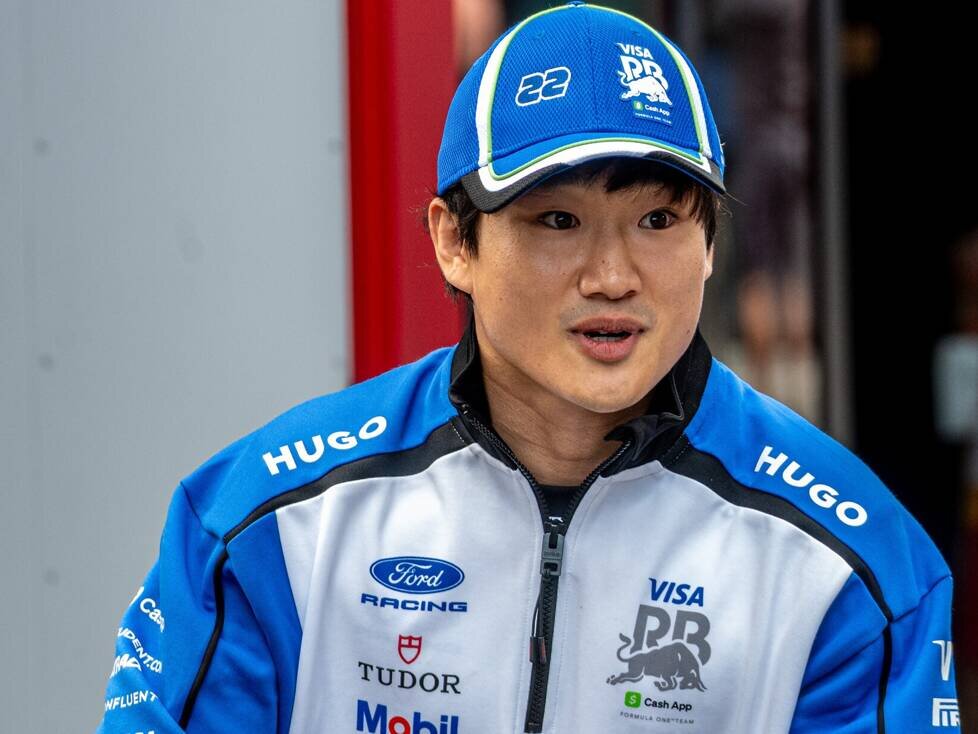
Yuki Tsunoda was thrown into the deep end of the 2026 season at Zandvoort, but the Japanese driver certainly impressed and is now ready for more
It was one of the most exciting personnel developments of the weekend at Zandvoort: Yuki Tsunoda made a completely unexpected return to the Racing Bulls cockpit, replacing Liam Lawson, who was called upon to fill in for Isack Hadjar at Red Bull.
What began as a difficult cold start under the all-new 2026 regulations ended up being a very strong case for his future. With a 13th-place finish in the Sprint, 12th in qualifying, and 11th in the race, the Japanese driver narrowly missed the points, but his driving performance was truly commendable.
Anyone who gets behind the wheel of a Formula 1 car in the middle of a season has a tough time anyway. But doing so in the first year of a fundamentally new technical regulation presents a mammoth task. The 2026 cars demand everything from the drivers—from altered downforce levels to highly complex energy management.
When asked what was the most difficult part of the transition, Tsunoda is very clear: “The biggest challenge was actually pretty much everything. There was an incredible amount to learn: energy management, the buttons on the steering wheel—simply everything. Every single process works differently.”
Tsunoda, who by his own admission had deliberately traveled to the Netherlands with a defensive mindset, still vividly remembered the immense difficulties the regular drivers had adapting during the winter tests in Bahrain, where they had seen “more clouds of white smoke than sunshine.”
His primary goal, therefore, was to avoid mistakes, keep the car on the track, and feel his way around.
The Japanese driver illustrated just how drastic the difference is from the previous generation based on his first virtual attempts in the simulator: “The first time I got into the simulator and hit the brakes, I crashed into the wall,” he explains with a laugh.
“The pedal pressure, those limit zones—it’s all different. And above all, the downforce is different.” The power delivery of the new hybrid system also surprised him at first, as he suddenly felt a strong deceleration from the system when it discharged.
A steep learning curve and rediscovering the “fire”
This made the speed with which Tsunoda picked up the pace all the more astonishing. A key factor in this was Saturday’s sprint race. The Japanese driver essentially used this race distance as a high-speed lesson.
“During those 24 laps, I was able to learn something new on every single lap,” he sums up, emphasizing how crucial those kilometers were for understanding the deployment procedures for the main race.
Despite his lack of experience—Tsunoda had been in the car “just four times in eight months”—the Racing Bulls driver quickly reached his limit. The only minor mistake came at the sprint start, when he clashed with Lindblad in Turn 1.
A situation he openly and self-critically attributes to his Formula 1 past: “To be honest, I turned into the corner just like I did last year. I’d simply forgotten that we have less grip.” He said he was surprised at how much the competition had to slow down in the first corner under the new conditions.
But this minor slip-up didn’t spoil the picture. On the contrary: In qualifying, he missed Q3 by a hair—just one-tenth of a second. For Tsunoda, this session was an emotional return to his roots as a racer.
“This qualifying session felt much more like a real qualifying session. I was able to trust the car more and really throw it into the turns,” he enthuses, visibly relaxed. “Honestly, I’ve missed that feeling—that hunt for the last thousandths, the last tenths. It’s a ton of fun for me, absolutely a ton of fun.”
A tough race and the team’s assessment
In Sunday’s main race, Tsunoda then put in a tenacious performance that took him up to eleventh place. He battled “for eighth and ninth place right up until the final laps” and proved that he quickly got the hang of the tricky area of tire management, even though the “characteristics of tire degradation were completely different” from in the past.
He takes the lack of points in stride: “Of course, it’s a shame that it wasn’t enough for points in the end, but I’ll take the result.” The fact that he was able to perform at such a high level right away after such a long absence from the cockpit surprised him the most: “Honestly, I think I was able to make progress faster than expected.”
He explicitly praised the Racing Bull car’s excellent balance as well as the team, which supported him tremendously and made it easy for him to push to the limit. According to Tsunoda, team officials were also “quite impressed by what I showed and very happy with the progress.”
The clear message to the paddock: “They should sign me”
Ultimately, this weekend was far more than just a sporting stint as a reserve driver for Yuki Tsunoda. It was an audition on the biggest stage possible. Before the weekend, he had hinted that spending a year on the reserve bench wasn’t an option for 2027 and that, if necessary, he would even consider a move to IndyCar. But Zandvoort has reignited his hunger for Formula 1.
“It’s definitely a thousand times better to have had this chance than to have no opportunity at all and not be able to show what I can do under these rules,” he says, summing up his return. Tsunoda has proven that he can adapt extremely quickly to radically changed conditions and hasn’t lost the fundamental pace of a Formula 1 driver.
When asked whether this weekend served as a calling card for the 2027 season, the Japanese driver responds with the immense self-confidence of a driver who knows he has delivered: “I know what I’m capable of, and I believe I was able to show most of the paddock what I’m capable of.”
His final message to the team principals who have not yet finalized their driver lineups for next year is therefore as simple as it is unambiguous: “It’s now up to my management and the teams whether they want to sign me or not. But in my opinion, they should.”