


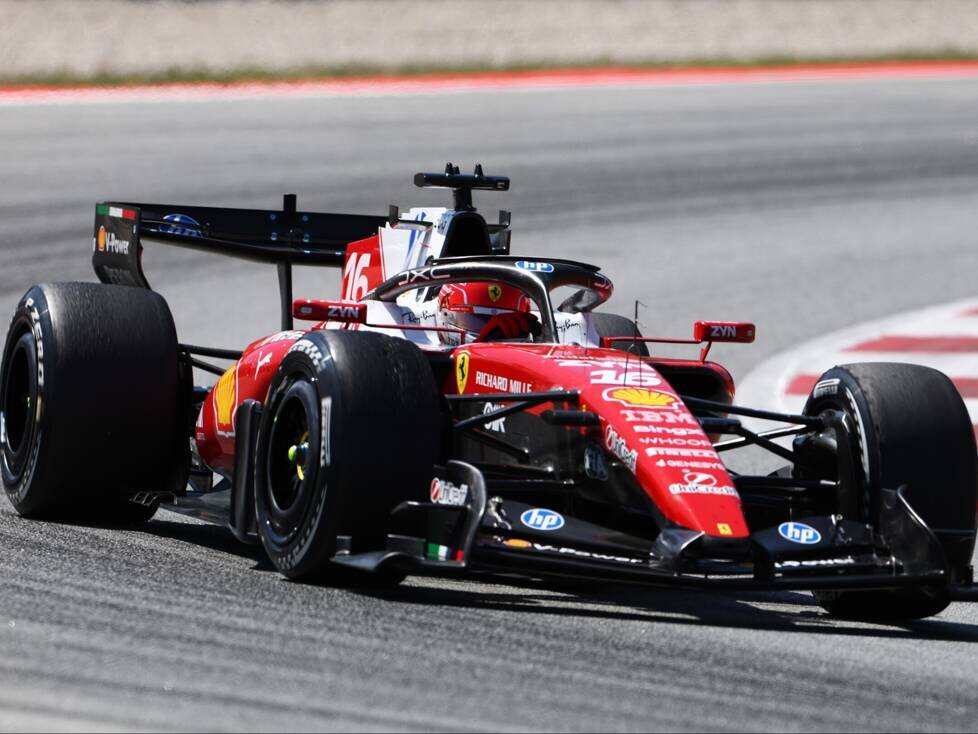
With the introduction of the first engine upgrade at the upcoming Formula 1 race in Spielberg, Ferrari will raise the intake air temperature to an even higher level
Ferrari is sticking with its “hot” engine. The Italian team’s Formula 1 power unit, designated 067/6, can operate at an intake air temperature of about 100 degrees, while all other power units on the grid operate at temperatures between 60 and 80 degrees.
In Maranello, this innovative concept was implemented thanks to a steel-alloy cylinder head, which allows for significantly higher combustion chamber pressures than the competition’s aluminum heads.
The project, spearheaded by Enrico Gualtieri’s team, is both bold and revolutionary. This development path will not be abandoned even with the updates brought to the track via ADUO (Additional Development and Upgrade Opportunities).
According to rumors, the engine—which is set to debut at the Austrian Grand Prix with the first FIA-approved update—will once again significantly increase the temperature of the air entering the intercooler. There is talk of values between 110 and 115 degrees.
The goal is to increase efficiency in the combustion chamber and halve the power deficit compared to the reference unit. According to Maranello, that engine is the Mercedes unit, while FIA data indicates that the most powerful internal combustion engine is the Red Bull Ford DM01.
In both cases, Ferrari’s power deficit is about 25 PS, and the hope is to reduce this to no more than 10 PS, which could then be made up with the second ADUO update, if necessary.
This assumes that the FIA does not change its mind following Red Bull’s repeated protests. After all, Red Bull itself does not consider its very first Formula 1 engine to be the benchmark by any means.
Thanks to the characteristics of the “hot” powertrain, Ferrari was able to grant the chassis and aerodynamics engineers significant design freedom. Because of the lower heat dissipation, the cooling system requires less cooling capacity to remain within reliability limits and was therefore designed with smaller radiators.
This enables more aggressive aerodynamic shapes. The SF-26 is the only car with a triangular airbox without side “ears” on the roll bar. The FTM system, with its flap that allows hot exhaust gases to be vented, also benefits from the advantages of the steel-alloy cylinder head.
“Plugging” the exhaust results in a loss of about seven PS, but this power loss is expected to be offset by the increased downforce generated by more efficient rear wing performance and improved airflow extraction at the diffuser.
The engine developers in Maranello are not abandoning the original concept, but are instead trying to fully exploit the potential that the 067/6 has to offer.