


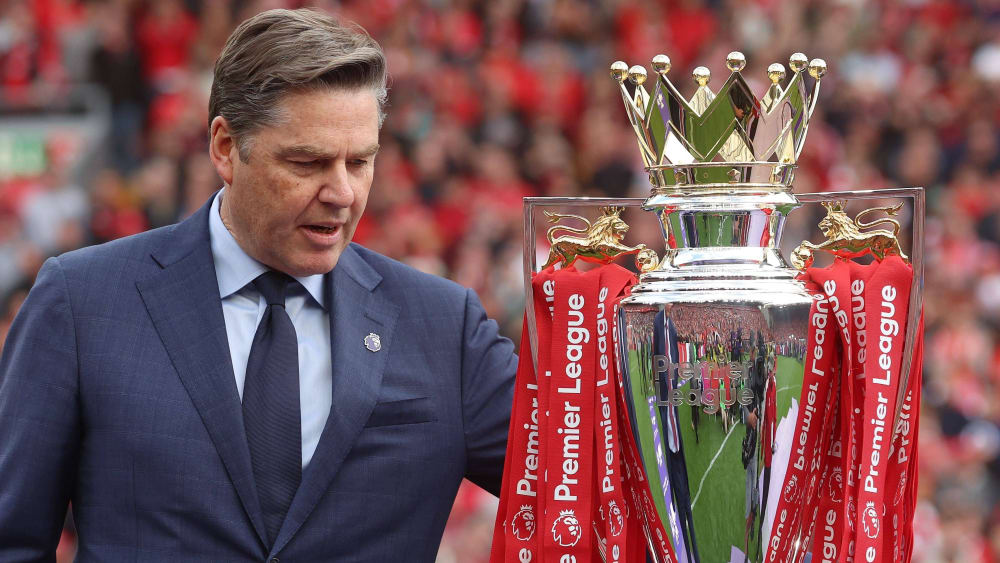
The Premier League CEO is concerned about domestic soccer. Richard Masters is particularly bothered by FIFA’s lack of consultation.
In the summer, it became all too apparent once again. With the Club World Cup, the participants were pushing the limits of what was manageable. Real Madrid played 68 competitive matches in the past season; in addition to their club commitments, top players can also have numerous international matches to contend with – Fede Valverde ultimately played 76 matches in 2024/25. It’s no wonder that the high workload of players in modern soccer is a recurring topic of discussion.
After all, there is no sign of a move away from the hectic schedule in the near future, with the new World Cup featuring 48 nations just around the corner. But that’s not all: FIFA already has new plans in the pipeline for the Club World Cup, with an expansion to 48 teams and a biennial cycle. A four-week summer break without any commitments, as recommended by many experts, seems a distant prospect.
Concerns about the Premier League
These circumstances prompted Premier League CEO Richard Masters to voice strong criticism of the world governing body at Leaders Week in London. “We believe that this has to change. We believe that national football must have a say in these changes,” Masters emphasized. Instead, however, the Englishman currently sees the national leagues in a “battle” with FIFA for the attention of fans and the playing time of players. “We have our differences with FIFA due to the lack of consultation.”
He sent a clear appeal to Zurich: “The calendar is full,” he added, “Of course, it’s also about the well-being of the players, but essentially it’s a battle for the fundamentals of soccer – namely the players and their place in the calendar.” That is why he sees it as his responsibility in his role to protect the Premier League. “We want all our owners and managers to wake up in the morning with one priority: to win or be successful in the Premier League,” said Masters, who fears that the large number of competitions will mean that players will have to be rested more often at weekends in the future. Another consequence, as Masters explained, is that the Premier League will start later than planned this season. This means that the already short winter break will have to be cut even further, and the English Football Association has been asked to abolish replay matches in the cups.
FIFPro players’ union warns
“This is not a conscious decision,” he complained. Rather, Masters sees a butterfly effect caused by officials who “make decisions about the future of soccer and exclude the leagues from these discussions.” However, he wanted to emphasize that UEFA was exempt from criticism: “UEFA consults with the European leagues and the Premier League,” Masters affirmed.
Despite all the justified criticism, it must also be noted that the Premier League contributes to the high workload of players. Since 2003, for example, the league has been holding friendly tournaments abroad—mostly in Asia and North America—during the preseason.
In addition to Masters, the players’ union FIFPro also recently issued a clear warning to the world of soccer in its season report on the workload for 2024/25. “The relentless expansion of overlapping competitions is leading to unprecedented demands and putting the health and well-being of players at increasing risk,” the report said. Furthermore, the president of the players’ union, Sergio Marchi, emphasized the “urgent need for more balanced competition calendars in conjunction with the implementation of minimum protection regulations and protected rest and recovery periods.”