


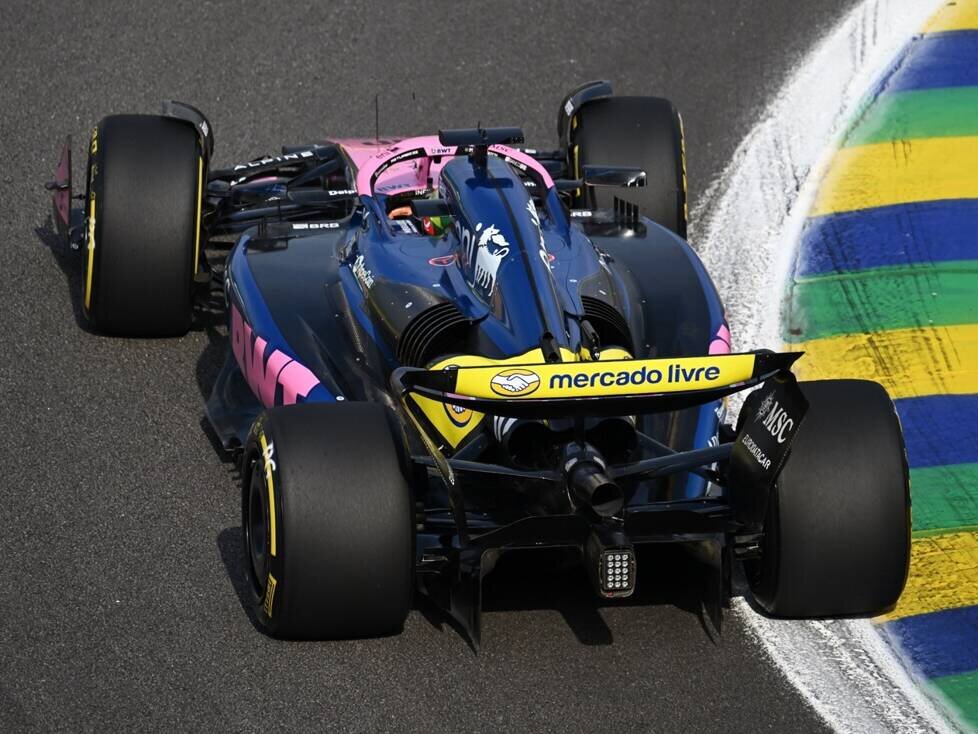
Alpine is bidding farewell to its own engines in Formula 1 and will be relying on Mercedes from 2006 onwards: Why the move is still fraught with uncertainty
Alpine is giving up the production of its own engines in Formula 1 after the 2025 season and will become a Mercedes customer in the future. Despite the switch to the long-standing successful manufacturer, however, Managing Director Steve Nielsen does not see this as an automatic guarantee of success.
“Mercedes has a long history in Formula 1. They were very successful when the last major rule change took place,” Nielsen said in an interview with Motorsport.com, referring to 2014. At that time, the Mercedes engine was initially vastly superior to the competition after the last major change.
“But that doesn’t mean it will be the same this time, because back then we switched from naturally aspirated engines to turbo hybrids with MGU-K and MGU-H. That was a massive change,” says Nielsen. “This time, the change is not as big because we already have turbo hybrids.”
Alpine believes it is on the right track
As part of the rule change for the 2026 season, the MGU-H, which recovers energy from the exhaust, will be eliminated. Overall, the electrical share of the drive system’s power output will be significantly increased. Although the change is not as dramatic as in 2014, some observers in the Formula 1 paddock believe that Mercedes could once again have the edge due to its vast experience. “We are confident that we have chosen the right partner. Whether they have done a better job than the others, I don’t know,” says Nielsen. He does not want to overestimate rumors of a possible Mercedes advantage: “In Formula 1, there is never a shortage of rumors about who is the best in this or that area. The reality is that no one knows anything for sure at the moment.”
Nielsen believes Alpine is on track with the development of its own car for next season. “We are currently running a very intensive wind tunnel program for the 2026 car. We believe we are making good progress, but ultimately you are measured against the competition,” he says. “You can work as hard as you want, strive for the best combination of performance, downforce, reliability, and strategy, but you only really know when the stopwatch is running.”
Integration of the Mercedes powertrain into the Alpine chassis
The move from a manufacturer team with its own engine department to a customer team is nevertheless a significant change for Alpine. However, Nielsen emphasizes that integrating the Mercedes powertrain into the 2026 chassis is less complex than in previous eras of Formula 1.
“In the past, a Ferrari engine was very different from a Renault engine, which in turn was very different from a Honda engine,” he explains.
“In recent years, regulations have meant that the powertrains are no longer so different physically, either in size or volume.” There are still differences in cooling systems and connections, but nothing fundamentally unknown.
Alpine has also been working closely with Mercedes since the technical agreement was signed in November 2024. “When you sign an agreement like this with a technical partner, the engineers receive the basic information very early on. It’s not as if we only found out about all this last week. We’ve been working with them for months.“
”The integration is complex, but it’s been planned over a long period of time and with many experts involved. So there shouldn’t be any problems physically fitting the engine into the car,” he concluded.