


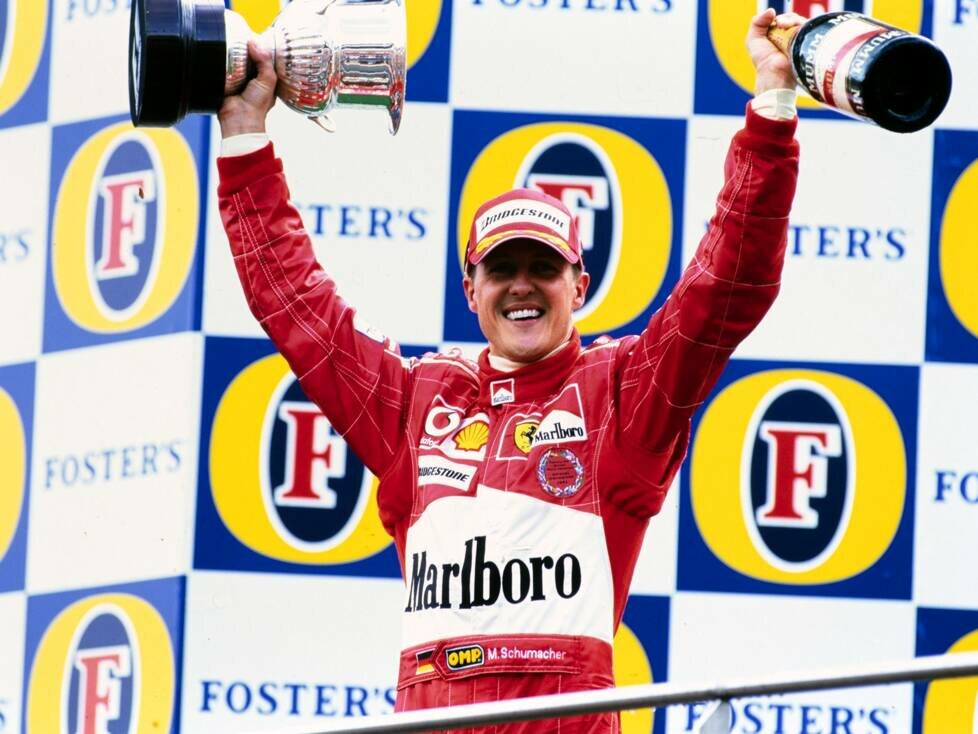
The new Formula 1 regulations focus on energy management: Martin Brundle believes that this would have been ideal conditions for Michael Schumacher
A new set of regulations is coming into force in Formula 1 this season, placing greater emphasis on energy management. Drivers will have to weigh up when to recover or use energy. Sky Sports expert Martin Brundle believes that these would have been ideal conditions for Michael Schumacher and Ayrton Senna.
“I actually think Ayrton and Michael would love these cars because they have the ability to use all the tools,” said the Brit during a McLaren media event. “And those who know how to use the tools best and get the most out of the cars would be successful.”
As a 158-time GP participant, Brundle knows what he’s talking about: the Briton drove alongside Schumacher at Benetton in 1992 and experienced that even back then, Formula 1 was about much more than just speed: “If you want to drive at full throttle for a long time, you have to take care of things.”
This principle is timeless, Brundle emphasizes. “It’s always been that way, whether it was Stirling [Moss] and [Juan Manuel] Fangio back then, or Jackie [Stewart], Graham [Hill], and Jim [Clark],” he recalls.
“Back then, it was about ring gears, drive shafts, universal joints, transmissions in general, engines, chassis, ball joints, clutches—we always had to take care of something.”
Martin Brundle: “You always had to take care of something.”
Even the legendary turbo years of the 1980s, when cars carried 220 liters of fuel, were no exception. “So we had to brutally ease off the gas and coast throughout the race,” recalls the Brit, “because that was the only way we could make it to the finish line with some power and enough fuel in the tank.”
Brundle himself learned this the hard way. “I once ran out of fuel just before the finish line and lost third place in Adelaide because I wasn’t careful enough,” recalls the 66-year-old. “So you always had to conserve something. Tires are a good example, especially nowadays.”
This is an aspect that remains unchanged to this day, albeit with a new focus, because in the new Formula 1 era, batteries are now also a sensitive resource: “So I think the specific challenge has changed, but the overarching challenge remains the same,” says Brundle.