


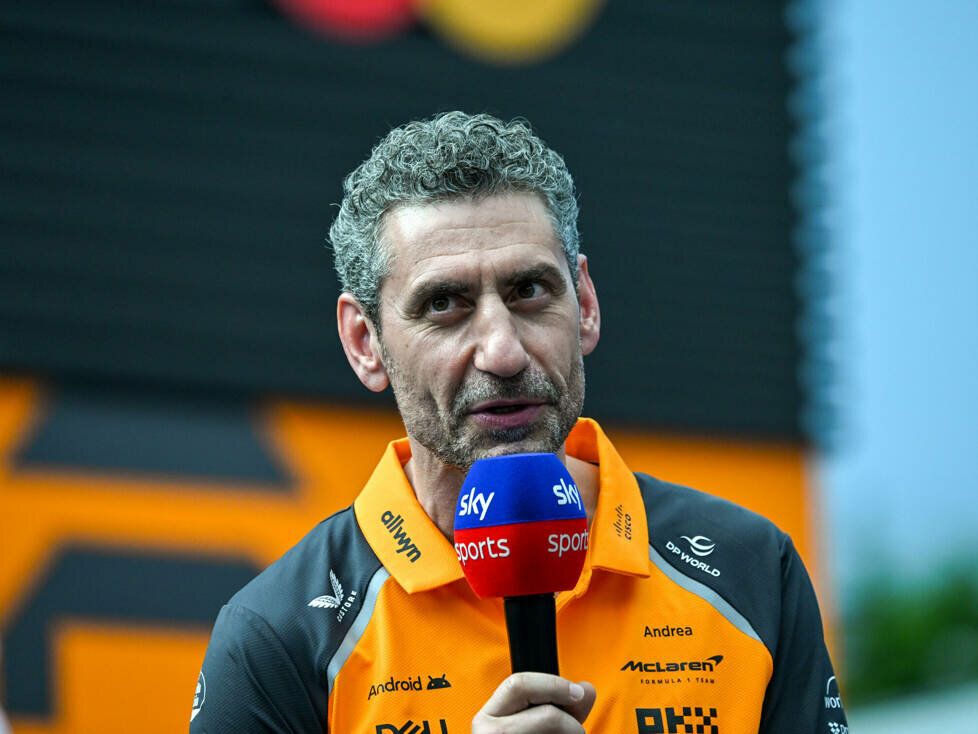
Verstappen’s aggressive strategy briefly shook McLaren – team boss Andrea Stella explains why the double victory in Spain was not a foregone conclusion
Despite what appeared at first glance to be a commanding one-two victory, McLaren team boss Andrea Stella was visibly relieved after the Spanish Grand Prix. Behind the controlled facade of the race, nervousness had been growing within the team, triggered by Red Bull’s bold strategy with Max Verstappen.
“When we saw that Verstappen was going for a three-stop strategy, we initially thought: no problem,” Stella explained after the race. “We had already overtaken him on the track and were convinced that our pace was enough.” But this assumption quickly proved to be deceptive.
Verstappen was so fast on fresh tires over long stretches that McLaren suddenly started to worry. “We even asked our drivers if they could push harder, but both said there wasn’t much more they could do. That was the moment we realized: this isn’t as under control as it looks,” said Stella.
Things got particularly tricky towards the end of the second stint: the two McLaren drivers, Oscar Piastri and Lando Norris, were only around 2.5 seconds apart – a very unfavorable gap if you need to react and fend off a possible attack from Verstappen with one of your drivers. “Fortunately, Oscar found some good pace at the end of the stint. That allowed us to make the second pit stop in a controlled manner and stick to the strategy,“ Stella praised his team.
Doubts about the risk: ”Two stops were faster – but not without risk”
Despite the threat posed by Verstappen’s pace, McLaren stuck to its original strategy. “We were convinced that the two-stop option was faster,” said Stella. “But it carries risks: if you push too hard at the start of a stint, you can be punished with massive tire degradation at the end – which is exactly what happened to Max at the end.”
Interesting: Tire wear was distributed differently on the Circuit de Barcelona-Catalunya than in previous years. Although the left front tire continued to be the most affected by abrasion, Stella said that rear tire temperature management played a bigger role. “Pirelli did a good job, the front tires hardly grained at all, but the rear tires overheat quickly in these temperatures.”