


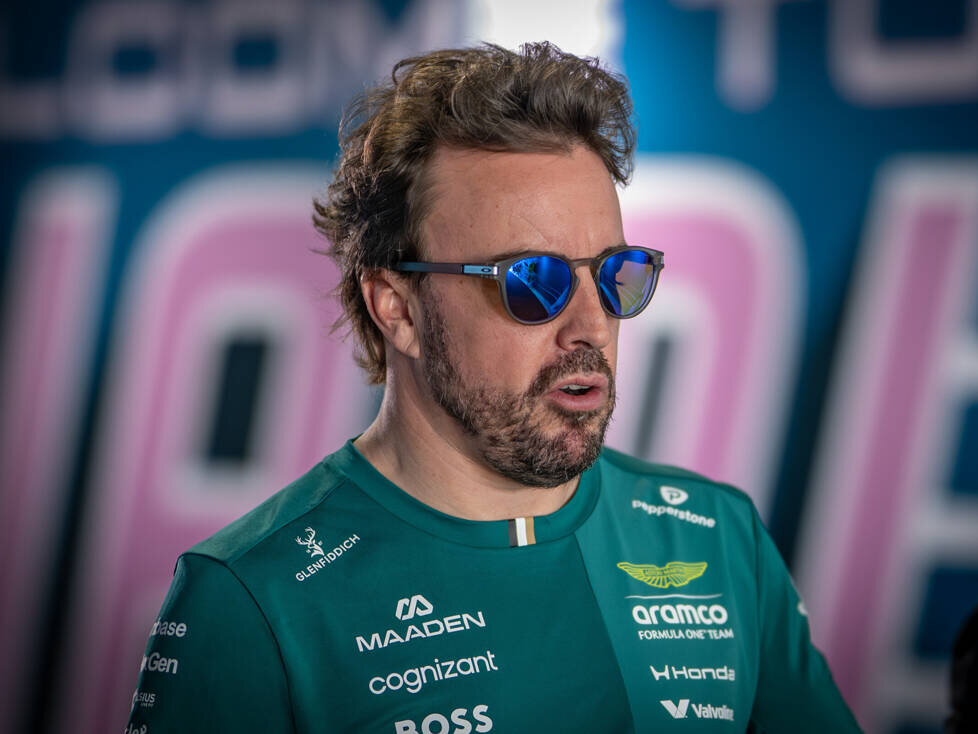
Aston Martin has resolved the initial technical issues with the AMR26, but Fernando Alonso warns: The actual performance gap remains huge
While Aston Martin has made some initial technical progress, there is still no sign of a real turnaround. Fernando Alonso makes this clear ahead of the Canadian Grand Prix.
Although the team now has a better handle on some of the AMR26’s biggest issues, the actual performance gap remains virtually unchanged. “That might bring us half a tenth of a second,” explains Alonso, referring to the improvements in drivability.
The real problem is much bigger: “It’s not the two or three seconds we’re missing.”
Aston Martin continues to struggle with fundamental issues
Aston Martin’s start to the season has been extremely difficult. Early on, reliability issues plagued the team, causing valuable practice and development time to be lost.
Particularly problematic were strong vibrations, abrupt gear changes, and erratic engine braking. These factors in particular made it difficult for the drivers to build confidence in the car and consistently push to the limit. Especially on tracks like Montreal, with many hard braking zones and intense acceleration phases, this can become a massive disadvantage.
Alonso explains: More confidence, but no miracles
At least Alonso now sees improvements in precisely these areas. Gear changes have become smoother, as has the behavior during braking and acceleration out of corners. While this gives the driver a bit more confidence in the car and allows him to attack corners more aggressively, the effect remains limited.
“This added confidence might bring a half-tenth,” says Alonso. But that doesn’t explain the large gap to the front-runners. The Spaniard makes it clear: the AMR26’s problems run much deeper.
Complex technical project: Aston learns “on the track”
A key reason for the difficulties is the car’s completely new technical concept. For the first time in many years, Aston Martin is building its own transmission—and combining this with an extremely aggressive rear-end layout.
This concept was significantly influenced by Adrian Newey, who has been involved in the project since last season. The goal was a particularly aerodynamically efficient rear end centered around the diffuser.
However, Aston Martin took major risks to achieve this. Among other things, the team is relying on an unusual “double-deck” battery and a modified position for the electric motor. The result: many systems are intricately interlinked—and that is precisely what makes tuning so difficult.
Honda explains the problems of the new generation
Engine partner Honda also confirms the difficulties. Chief Engineer Shintaro Orihara explains that the new 2026 regulations have drastically altered the power unit’s behavior.
Especially in the partial-load range and during engine braking, the internal combustion engine now operates significantly more aggressively than before. At the same time, significantly more electrical energy must be recovered.
This leads to unfamiliar reactions from the car—especially during gear changes and energy management. According to Honda, they now have a better understanding of the causes but are still working on fine-tuning the system.
No quick solution in sight
Trackside chief Mike Krack therefore openly refers to a “complex issue” that will keep the team busy for a long time to come. While many of the original reliability issues have since been resolved, new difficulties emerge with every step.
That is precisely why the entire transmission and power unit issue is currently a work in progress. What makes it particularly bitter is that even if Aston Martin fully resolves these problems, Alonso says the team will still lag far behind the competition—especially Mercedes—in terms of engine performance and energy efficiency.