


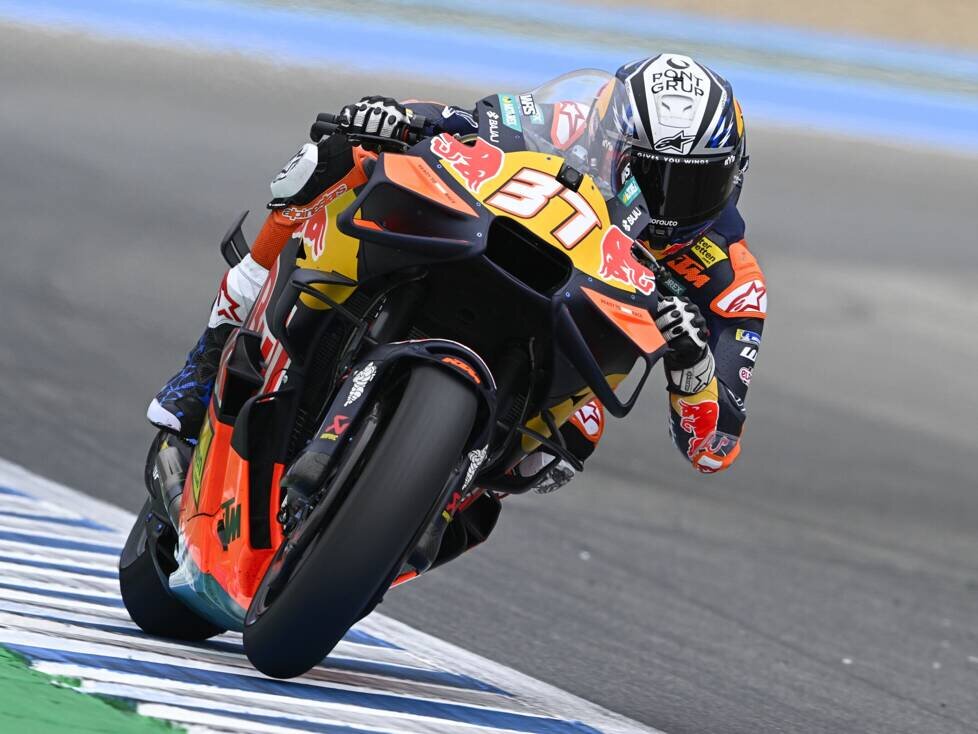
Damaged aerodynamics quickly become a decisive disadvantage in MotoGP—Luca Marini and Pedro Acosta describe the impact of lost winglets
At the Spanish Grand Prix, it became clear once again just how sensitive modern MotoGP machines are to even the slightest changes in aerodynamics. Luca Marini and Pedro Acosta, in particular, know this all too well.
After collisions during the race, both riders immediately felt just how severely damaged aerodynamic elements can affect the bike’s handling.
Marini: The influence of the winglets is immense
Marini had to cope with several defects in his fairing during the race: “All my left winglets were gone.” This made the bike “really extremely difficult to ride.” The large winglets, in particular, had an enormous influence: “It’s unbelievable how much a winglet like that affects the bike.”
In addition to the visible damage to the large aero elements, the area around the fork had also sustained damage. This combination was particularly noticeable in two crucial areas: during acceleration and braking.
Marini explains that wheelie control and stability under braking, in particular, suffered massively. “Really, really difficult,” he sums up, soberly noting that under these circumstances, he was merely a passenger.
Acosta also suffered from damaged aero
KTM rival Acosta had a similar experience; he also lost parts of his aero and confirms that the problems felt almost identical. When asked if he had experienced the same stability issues and wheelies, he replied succinctly: “Exactly the same. Exactly the same. It’s pretty tough.”
The Spaniard goes a step further and puts the situation into the context of the track. The fact that the race took place in Barcelona, he felt, had somewhat mitigated the situation: “Fortunately, it’s not a particularly fast track.”
On high-speed circuits like Silverstone, the effects would likely have been even more drastic, the KTM rider explains. What stood out particularly to Acosta was the unusual behavior during acceleration. Due to the loss of downforce, it was extremely difficult to keep the front of the bike on the ground.
“It was difficult not to crash over the front wheel. I was doing wheelies all the way up to fifth gear. That’s pretty unusual,” emphasizes the Spaniard, underscoring the key role aerodynamics plays in modern MotoGP.
While mechanical grip and engine power used to be the focus, today it is often the precision of airflow that determines victory or defeat in MotoGP. Even minor damage can massively shift the balance of power. This is a factor that is increasingly decisive in the close-fought field of the premier class.