


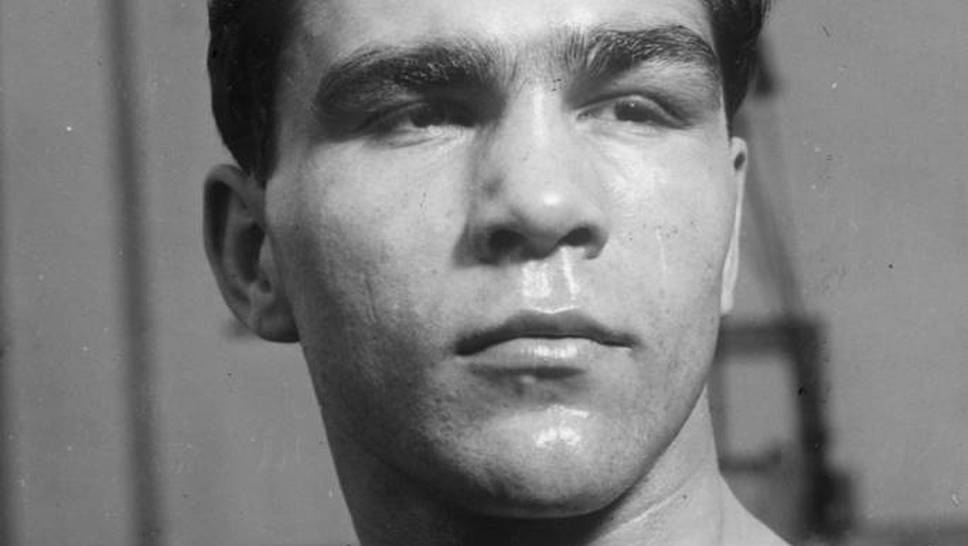
Max Schmeling, who became a German legend as world champion and conqueror of Joe Louis, was born 120 years ago today. As someone who helped people escape from Nazi Germany, he also became a lifesaver.
Max Schmeling was born 120 years ago today. He was the only German world champion in all weight classes, the greatest idol of German boxing, and perhaps of German sports in general.
His historic world championship triumph over Jack Sharkey and his sensational victory over Joe Louis made him a legend in the 1930s, the stuff of books, films, and plays—Schmeling himself also immortalized himself in popular culture with the song quoted above.
It was not until many decades after the end of his career that it became known that he was more than just a great athlete: Schmeling’s greatest heroic deed was saving two young lives in the midst of one of the darkest hours in German history.
Victory over Joe Louis made Max Schmeling a legend
Schmeling was born on September 28, 1905, in Klein-Luckow, in the Uckermark region between Brandenburg and Mecklenburg. The family soon moved to Hamburg, where his father found work as a sailor. The young Max found an apprenticeship in Cologne and began boxing there at the age of 18.
Just one year later, in 1924, he turned professional, becoming German champion in 1926 and European champion in 1927. Max Schmeling was only 1.85 meters tall and weighed 85 kilograms, making him almost a light heavyweight, a counterpuncher with brilliant reactions and a rock-hard right hand.
Schmeling helped Jewish youths to escape
Louis—who would become a good friend of Schmeling’s—won the rematch decisively, and later the friendship between the two and Schmeling’s help for Louis became legendary.
The fact that Schmeling’s good reputation remained intact in the post-war period was also due to his comparatively reserved response to Hitler’s takeover of Germany.
Schmeling did not oppose the system and later accused himself of “naivety” in his dealings with the regime – but he nevertheless maintained a certain distance: he did not join the NSDAP, kept his Jewish manager Joe Jacobs, and even refused an honor from Adolf Hitler. “I am a boxer, not a politician” was one of his most famous quotes.
As it later emerged, Schmeling even provided active help to victims of the Hitler regime: in 1938, during the November pogroms, he hid two Jewish teenagers—the sons of a boutique owner who was a friend of his—in his hotel room, helping them to escape.
The rescued brothers, Henri and Werner Lewin, made the story public in 1989. However, it was not until 12 years later that an article in Sports Illustrated brought the story to wider public attention.
“If people had found out what Max did, he would certainly have been shot,” Henri Lewin, eternally grateful, speculated in an interview with Welt am Sonntag in 2004.
Ali and Tyson also paid tribute to Schmeling
As a successful businessman and highly honored patron of German sports, Schmeling remained in the public eye even after the war and the end of his career in the ring.
It was not until 1987, after the death of his beloved wife Anny Ondra, that he largely withdrew from public life – but numerous sports and social celebrities sought his company until the end. Schmeling died on February 2, 2005, at the age of 99. His funeral was attended by Henry Maske, Wladimir Klitschko, Franz Beckenbauer, Uwe Seeler, and others.
While Schmeling was still alive, the Lewin brothers, whom Schmeling had saved and who became successful hoteliers in the USA, organized a large tribute ceremony in Las Vegas, where Muhammad Ali and the young Mike Tyson, among others, bowed before Schmeling.
“I had Nuremberg bratwurst, sauerkraut, and Berlin meatballs flown in especially for the occasion. Film clips of his fights were shown, and Max commented on them himself,” recalled Werner Lewin.
He died in 2008, his brother eight years later after a long and fulfilling life.